Search Results
Filters
Advanced Search
2407 Results
-
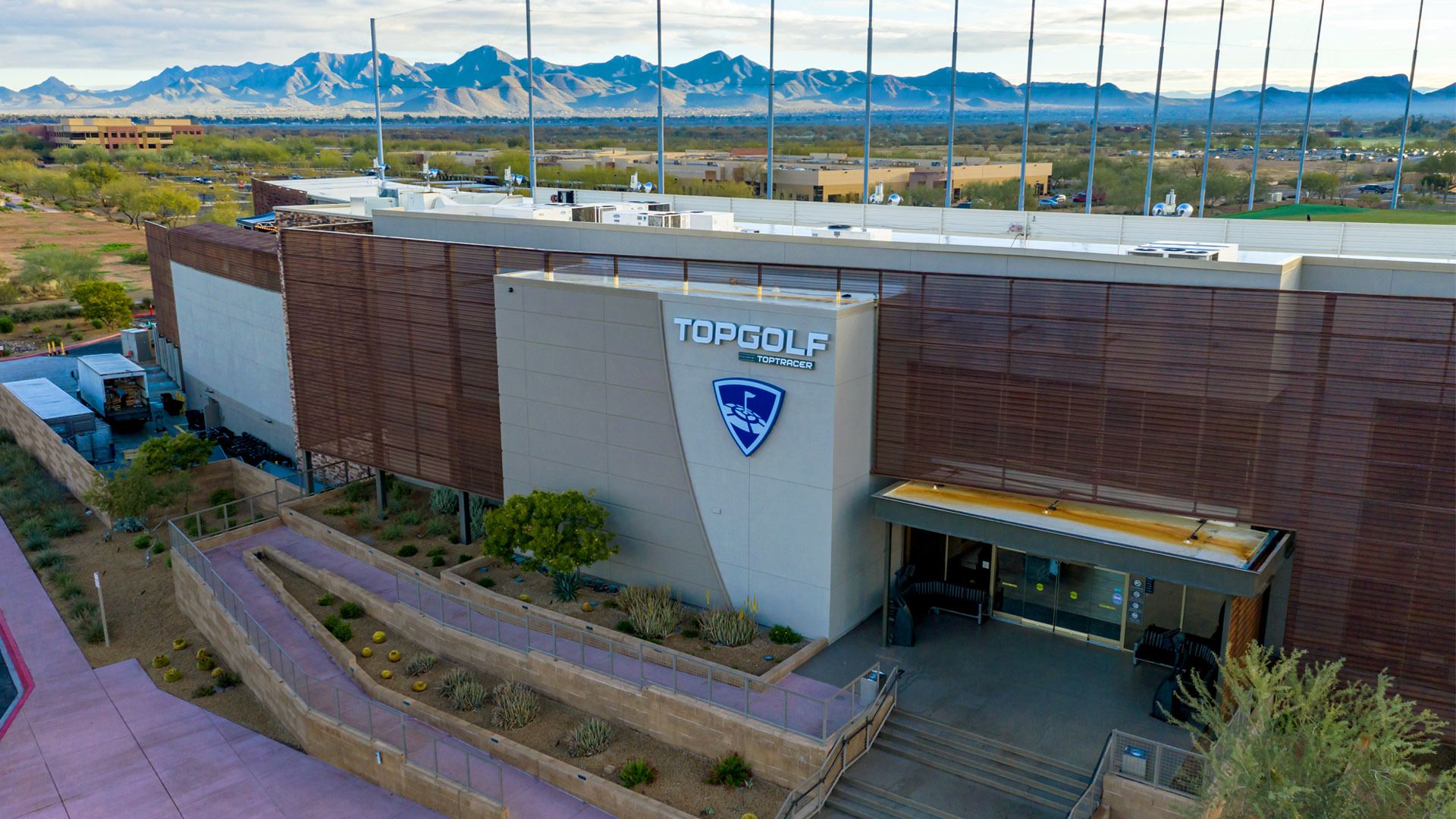
VA Live Scottsdale
Seminar - Nov 12, 2026 Todd Holbrook
Learn how new AI-enabled Agentic verification workflows can help you improve coverage, accelerate debug, and validate complex SoCs earlier. This seminar covers: AI-Driven Functional Verification Improving Testplan-Driven Verification Accelerating your debug workflow with AI Agents Software-Aware Verification IP Date Thursday, November 12, 2026, | 9:30 AM - 5:00 PM Location Topgolf Scottsdale 9500 E. Talking Stick Wy, Scottsdale, AZ 85256
-
Beyond the Numbers: What the 2026 Functional Verification Study Reveals
Webinar - Nov 10, 2026 Harry Foster
In this webinar, we will look beyond the individual statistics to explore the broader issues emerging from the study. We’ll examine what the data tells us about increasing design and system complexity, declining first-silicon success, the growing impact of software, and the expanding role of technologies such as AI, formal verification, emulation, and other advanced verification approaches.
-
Discover a Smarter Approach to In-System Test Verification at ITC 2026
Resource (Verification Horizons Blog) - Oct 06, 2026 Jake Wiltgen
In-System Test is rapidly becoming a critical capability for advanced silicon, enabling new approaches to manufacturing test, silicon health monitoring, lifecycle extension, and software-driven diagnostics. But as IST grows in importance, it also expands the verification problem. It is no longer enough to validate DFT structures in isolation.
-
UALink over UCIe 3.0: Maximizing Performance for Chiplet-based Designs
Resource (Verification Horizons Blog) - Oct 01, 2026 Sriram Mundru
This blog is about how UALink and UCIe 3.0 come together to make chiplet‑based accelerator systems scale efficiently. It explains, in practical terms, how UALink handles accelerator‑level communication while UCIe reliably carries that traffic across die boundaries. The discussion focuses on real system challenges such as flow control, credit exhaustion, link retraining, and clean recovery without full resets.
-
The Next Chapter for PCIe: Chiplet Integration with UCIe
Resource (Verification Horizons Blog) - Sep 25, 2026 Prashant Dixit
From processors and accelerators to storage, networking, and memory subsystems, PCI Express (PCIe) has been the backbone of modern compute platforms due to its high bandwidth, software compatibility, ecosystem maturity, and proven interoperability. But as the semiconductor industry moves from monolithic SoCs to chiplet-based architectures, PCIe implementation is changing.
-

Smarter FMEDA, Safer Designs: The Questa One Verification IQ Compliance Advisor Story
Resource (Verification Horizons Blog) - Sep 18, 2026 Yaswanth-Kumar Kalla
Without end-to-end traceability, engineers must manually maintain links between requirements, FMEDA analyses, safety metrics, and verification activities across multiple tools. This makes it difficult to verify coverage, assess the impact of changes, and maintain audit readiness. As projects grow in complexity, the lack of integrated traceability increases engineering effort, reduces visibility, and raises the risk of compliance gaps and inconsistent safety analyses.
-
Why Verification Traceability Must Evolve for Modern Systems
Resource (Verification Horizons Blog) - Sep 11, 2026 Jake Wiltgen
Verification traceability is becoming one of the most important challenges in modern system development. As products expand across system architecture, electronics, silicon, and embedded software, verification can no longer be treated as a single-domain activity. At the same time, requirements continue to change and complexity keeps increasing, making it harder for teams to understand how verification results connect across the lifecycle.
-
The 2026 Functional Verification Study: Evidence of a New Verification Operating State
Resource (Verification Horizons Blog) - Sep 08, 2026 Harry Foster
We have released the results of the 2026 Siemens EDA and Wilson Research Group Functional Verification Study . In previous years, we published separate IC/ASIC and FPGA reports. For 2026, we expanded that approach into a broader research collection: four focused whitepapers, a methodology reference paper, and a Functional Verification Data Atlas containing the supporting findings and historical trends. There is a lot of data in this year’s study. But one result is difficult to ignore.
-
2026 Siemens EDA and Wilson Research Group Functional Verification Study
Track - Sep 08, 2026 Harry Foster
The 2026 Siemens EDA and Wilson Research Group Functional Verification Study examines how today’s increasingly software-driven and interconnected designs are reshaping functional verification.
-
2026 Functional Verification Study: Executive Findings
Paper - Sep 08, 2026 Harry Foster
Get an overview of the current industry baseline, participant profile, six headline findings, and their principal implications for functional verification.
-
2026 Functional Verification Study: Executive Findings
Session - Sep 08, 2026 Harry Foster
This video explores the key findings from the 2026 Functional Verification Study: Executive Findings white paper, which depicts an industry where processor-rich and accelerator-class designs, software-driven functionality, safety and security requirements, and increasingly complex system interactions are reshaping the nature of functional verification.
-
2026 Functional Verification Study: Executive Findings
Resource (Paper (.PDF)) - Sep 08, 2026 Harry Foster
This paper reveals an industry in which processor-rich and accelerator-class designs, software-driven behavior, safety and security requirements, and increasingly complex system interactions are reshaping functional verification. First-silicon success continues to decline, FPGA production bug escapes have risen, verification consumes roughly half of project time, and most projects are behind schedule.
-
Five Signals from the 2026 Functional Verification Study
Session - Sep 08, 2026 Harry Foster
This video explores the key findings of the Five Signals from the 2026 Functional Verification Study white paper, which suggests that the IC verification challenge is undergoing a fundamental transformation. The data shows that verification is no longer simply becoming more complex.
-
Five Signals from the 2026 Functional Verification Study
Resource (Paper (.PDF)) - Sep 08, 2026 Harry Foster
The forthcoming 2026 Siemens EDA and Wilson Research Group Functional Verification Study indicates that the IC verification problem is changing in nature, not simply growing in complexity.
-
Five Signals from the 2026 Functional Verification Study
Paper - Sep 08, 2026 Harry Foster
Explore five connected trends shaping functional verification, including alternative explanations, interpretation guardrails, respondent-vantage considerations, and the industry’s shift toward building system confidence in executable systems.
-
AI in Functional Verification: What the 2026 Industry Data Reveals
Paper - Sep 08, 2026 Harry Foster
Learn where AI is being applied within functional verification, how broadly it is integrated into engineering workflows, and where adoption remains limited.
-
AI in Functional Verification: What the 2026 Industry Data Reveals
Session - Sep 08, 2026 Harry Foster
This video explores the key findings from the AI in Functional Verification: What the 2026 Industry Data Reveals white paper. For the first time, the 2026 Siemens EDA and Wilson Research Group Functional Verification Study provides industry data on AI/ML adoption in functional verification. Among 604 participants, 82.8% report use beyond evaluation or pilot projects, yet only 9.0% describe AI as broadly integrated across the verification flow.
-
AI in Functional Verification: What the 2026 Industry Data Reveals
Resource (Paper (.PDF)) - Sep 08, 2026 Harry Foster
For the first time, the 2026 Siemens EDA and Wilson Research Group Functional Verification Study provides industry data on AI/ML adoption in functional verification. This paper reports on these findings, examining applications, benefits, and barriers to adoption. Leading applications of AI are debug and root-cause analysis, testbench and test generation, and coverage modeling and analysis.
-
DFT's Expanding Role in Software-Driven Silicon: From Structural Test Closure to System-Assurance Evidence
Session - Sep 08, 2026 Harry Foster
This video explores the key findings from the DFT's Expanding Role in Software-Driven Silicon white paper, which provides a snapshot of current industry practices rather than a longitudinal trend analysis. While many of the individual techniques and workflows highlighted in the study are well established, the results quantify their adoption within a common industry framework and reveal how they are increasingly converging.
-
DFT's Expanding Role in Software-Driven Silicon: From Structural Test Closure to System-Assurance Evidence
Resource (Paper (.PDF)) - Sep 08, 2026 Harry Foster
The 2026 Siemens EDA and Wilson Research Group Functional Verification Study includes new DFT questions that provide a current-state view rather than longitudinal trend data. The data suggests that DFT verification is increasingly connected with mainstream verification infrastructure, software-driven diagnostics, and silicon-lifecycle evidence.
-
DFT's Expanding Role in Software-Driven Silicon: From Structural Test Closure to System-Assurance Evidence
Paper - Sep 08, 2026 Harry Foster
Examine the earlier verification of design-for-test logic, integration between DFT and functional verification, accelerated execution, and evolving ownership across engineering teams.
-
Functional Verification Study Survey Methodology Evolution
Reference - Sep 08, 2026 Harry Foster
Interpreting Long-term Results Across the 2024 Methodology Transition Understand the study’s recruitment transition, the appropriate use of historical comparisons, the treatment of nonresponse, and important considerations for interpreting the survey results.
-
Functional Verification Study Survey Methodology Evolution
Resource (Reference (.PDF)) - Sep 08, 2026 Harry Foster
Beginning in 2024, the Siemens EDA and Wilson Research Group Functional Verification Study survey shifted from industry-list recruitment to a qualified sample-provider model, creating a break in direct comparability with studies conducted from 2007 through 2022.
-
2026 Functional Verification Data Atlas
Reference - Sep 08, 2026 Harry Foster
Access the complete study data, including charts, survey-question wording, response bases, IC/ASIC and FPGA breakouts, nonresponse information, and data-quality notes.
-
2026 Functional Verification Data Atlas
Resource (Reference (.PDF)) - Sep 08, 2026 Harry Foster
A chart-level reference to selected 2026 Functional Verification Study findings. It is intended for lookup and citation support rather than long-form interpretation.