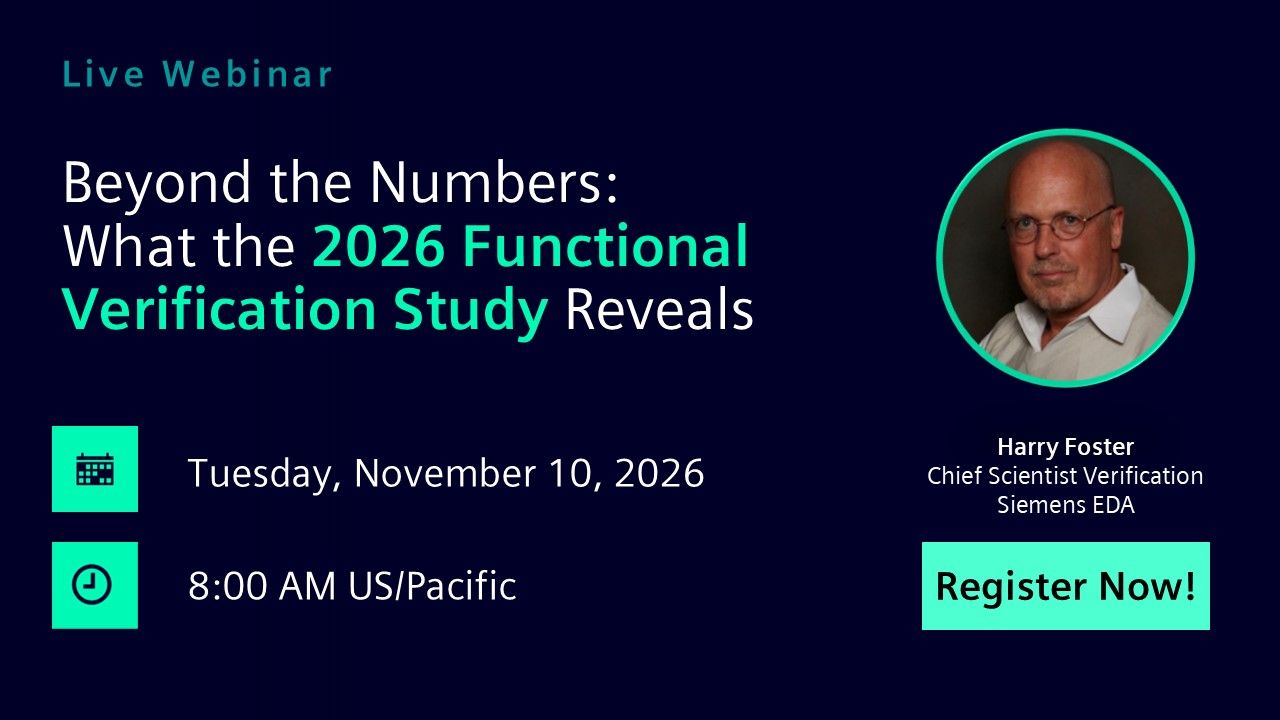
Beyond the Numbers: What the 2026 Functional Verification Study Reveals
In this webinar, we will look beyond the individual statistics to explore the broader issues emerging from the study. We’ll examine what the data tells us about increasing design and system complexity, declining first-silicon success, the growing impact of software, and the expanding role of technologies such as AI, formal verification, emulation, and other advanced verification approaches.
-
Session Registration
-
Session Overview
The 2026 Siemens EDA & Wilson Research Group Functional Verification Study offers more than a snapshot of industry trends. Its findings point to important changes in the nature of the verification challenge itself.
In this webinar, we will look beyond the individual statistics to explore the broader issues emerging from the study. We’ll examine what the data tells us about increasing design and system complexity, declining first-silicon success, the growing impact of software, and the expanding role of technologies such as AI, formal verification, emulation, and other advanced verification approaches.
We’ll also consider what these trends mean for the way verification teams organize, measure progress, allocate resources, and prepare for the challenges ahead.
What You Will Learn
- Key findings from the 2026 Functional Verification Study.
- The larger industry trends behind the data.
- How the verification problem is changing as designs become more software-driven and system-oriented.
- Emerging challenges involving complexity, productivity, safety, security, and verification convergence.
- What the findings suggest about the future direction of functional verification.
Who Should Attend
- Verification engineers and verification leads.
- Design and verification managers.
- SoC and system architects.
- Hardware and software engineering leaders.
- Emulation, formal verification, and FPGA prototyping specialists.
- Engineering executives responsible for verification productivity, quality, and time-to-market.
- Anyone interested in how growing system complexity, software content, AI, safety, and security are reshaping the verification challenge.